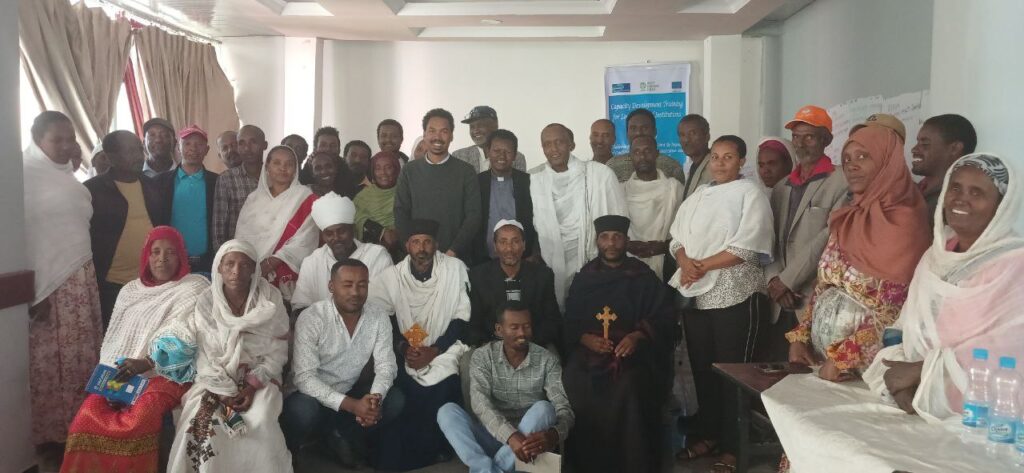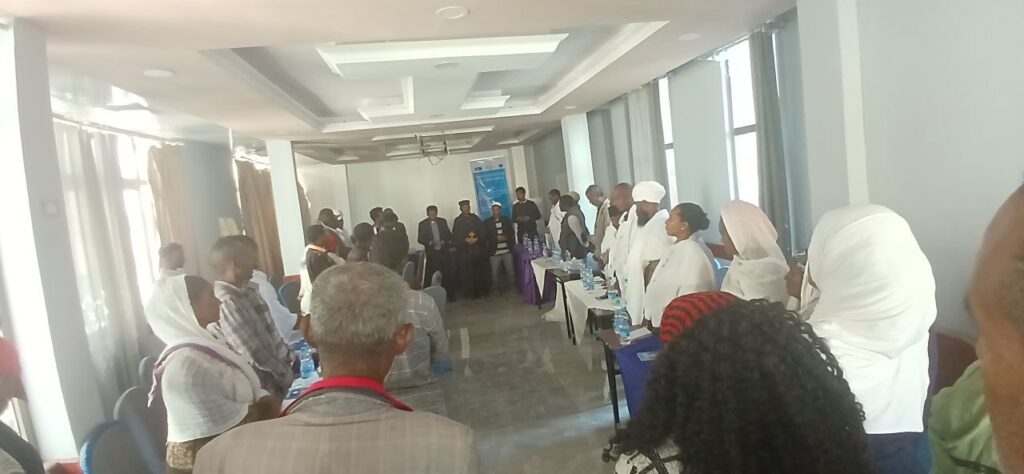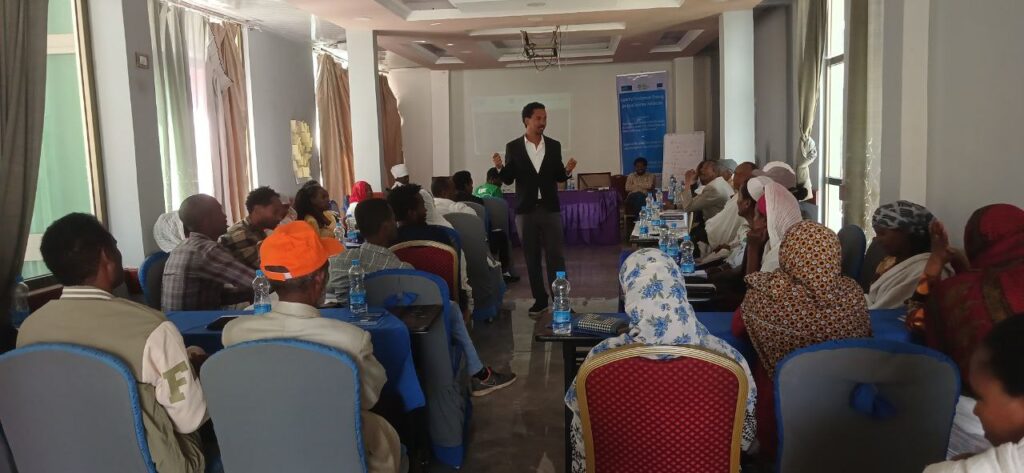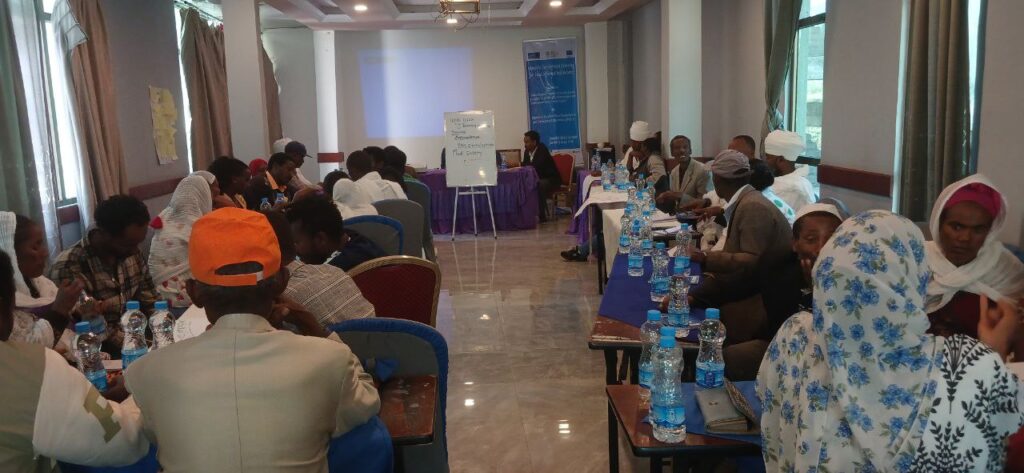

Ghion Peace Reconciliation and Development Association with the support from Welthungerhilfe (WHH) has organized an impactful training on the issues of conflict prevention, management and resolution from January 23-26, 2025 at Jan Tekel Hotel. The program brought together representatives from Faith-Based Organizations (FBOs), Community-Based Organizations (CBOs), Women, Youth, and Peace Committees, fostering collaboration to strengthen local peacebuilding efforts.
The training centered on three key themes: understanding conflict, promoting peace, and mastering conflict prevention, management, and resolution. The curriculum was thoughtfully designed to resonate with participants’ local knowledge and experiences, blending theoretical foundations with practical applications. Over the two days, sessions progressively built skills through interactive discussions, case studies, and simulations tailored to real-world challenges.
The workshop served as a vital platform for uniting members of informal local institutions- such as elders and community mediators-with formal peacebuilding actors. These grassroots contributors, often overlooked in formal processes, play a critical role in maintaining community-level peace. The training reaffirmed their importance, emphasizing that sustainable peace requires collaboration between formal structures and informal actors working in complementary roles.
Participants shared critical insights into the challenges facing community-based peace initiatives. Key concerns included a lack of resources and institutional support, deepening ethnic and religious divisions, and the growing disengagement of youth from traditional conflict resolution mechanisms. While women actively participated, their roles in formal peace processes were recognized as undervalued, underscoring the need for greater inclusion. The vital contributions of informal institutions, particularly elders mediating conflicts, were highlighted as a cornerstone of local peacebuilding.
The training achieved several significant outcomes. It fostered cross-sector dialogue, enabling diverse groups to exchange perspectives and reinvigorate local peacebuilding strategies. Discussions emphasized the need for strategic planning to secure official recognition for bodies like the Shimigilina Council, enhancing their impact. Youth participants gained practical conflict resolution skills through engaging case studies and simulations, equipping them to contribute effectively to peace efforts.
The active participation of women was a standout feature, with their contributions enriching discussions and ensuring diverse perspectives shaped the dialogue. This inclusion not only advanced gender equality but also strengthened the foundation for more inclusive and sustainable peacebuilding strategies.
The sessions were marked by dynamic participation, with attendees openly addressing their communities’ most pressing challenges. A strong consensus emerged on the need for enhanced cooperation across sectors and institutions to tackle these issues effectively. The training underscored that lasting peace requires collective action, shared responsibility, and the integration of diverse voices-particularly those of women and youth- into all levels of conflict resolution.
By equipping stakeholders with practical tools and fostering collaboration, GPRDA’s training has laid a strong foundation for revitalizing community-driven peacebuilding and addressing the complex challenges facing local communities.